Bone Building using the Marodyne LiV (Low intensity Vibration)
Whole body vibration was originally used as a means to build bone density for astronauts as they lose bone quite rapidly floating about in space. The vibration plate like weight bearing activities, enables muscles and bones to work against gravity.
Recently though, it has been considered as a possible therapeutic intervention for increasing bone density in those who have osteoporosis. Some studies have shown that the effect of using this device is not too dissimilar to the positive effects of those gained from doing short term resistance exercise.
There are various vibration plates on the market but not all are safe or suitable and they do vary sharply in price. The one I use which is recommended by Dr Nick Birch (orthopedic spinal consultant) is called the Marodyne LiV and is designed to be used for 10 minutes a day, standing still and upright because in this position, the frequency and amplitude of the vibrations are optimised to be exactly right for your legs, hips and back. According to Marodyne, any detectable difference with regards to an increase in bone density will vary for each individual. You may also experience improvements in muscle strength , balance, pain relief and general fitness sooner, especially if used in conjunction with a healthy calcium – protein rich diet along with strength and resistance training. It is thought this device may help to stimulate your circulation including the supply of nutrients to build bone.
Other Vibration Platforms
In comparions, most vibration machines in gyms have a larger platform with a much higher and more powerful G- force output. I tried this in the distant past a few years ago and found it to be too strong as the high intensity gym plate vibrates at 50-80 Hz and 8g. This type of vibration plate is not recommended for individuals with weaker bones. These machines focus more on strength training and are unlikely to offer the same clinical benefits according to some studies.
The Marodyne – |How does it work?
After 35 years of research studying a variety of frequencies it was found that the Marodyne vibrating at 30 Hz and 0.4g was safest at boosting bone density. The 0.4g refers to the impact the Marodyne works at G force. This is lower than the impact of walking which is roughly 1.2g. However the question arises : is it powerful enough to make a significant difference? According to the research done in developing this device, vibration at 30Hz is equal to a low intensity, high frequency mechanical stimulus that is used in therapeutic applications to stimulate bone and muscle growth without causing damage. From my own experience, I find it gives a gentle vibration and a comfortable, relaxing sensation that vibrates up the body from the feet. I have found from using it daily, that it eases any muscular niggles I may have (from time to time) in my hip or lower back.
How this works is not completely understood but here is one hypothesis. When you stand on it, it sends tiny vibrations throughout your body. This causes muscles to contract rapidly which increases circulation and oxygen to supply the body cells with nutrients required to build bone. In other words, vibration signals transmit and amplify into bone tissue bringing nutrients to build bone.
Another hypothesis suggests that it improves muscle strength and power by increasing neuro muscular activation as in weight bearing exercise.
The cost
One major disadvantage is its cost. It currently retails at £2,800 if you have a diagnosis of osteoporosis or a general medical condition ( refer to an approved list). Osteopenia is not included in this list, so without this discount it retails around £3,300. The The Marodyne while expensive, is generally regarded as a safe device.
Using the Marodyne
It is easy to set up and the instructions are straightforward. The platform should be set up on a flat level floor (laminate or tiled floor is ideal) but not on carpet. You simply stand tall in the correctly placed foot position for 10 minutes each day, in socks or bare feet. No shoes. When prompted by the 5 second count down, you step on it and place your feet level with the logo and stand tall in good posture. However, consistency in using it, is key!
Feet are positioned level with the logo.
Does it work – Its efficiacy ?
Independent research studies * conclude that body vibration platforms in general are still investigational for osteoporosis and low BMD and that there may be modest effects. Vibration Therapy is something that should be perceived as an adjunct along with strength, balance,weight bearing exercise and nutrition. It should not be regarded as a replacement for bone medication treatment for those with high risk osteoporosis .
My experience in using Vibration Therapy
I started using the Marodyne fairly recently towards the end of this year in November 2025. As yet it is too soon for me to declare any significant results but I am happy to see if using it regularly can make a positive difference to my bone density. I enjoy using it around the same time each morning and find that 10 minutes passes very quickly when reading, supporting a book on a high stand whilst standing tall. I am not on bone meds at present which is my own personal decision. However, I look forward to having my next combined REMS and DEXA scan in October 2026 and hopefully, the outcome may reveal a positive result.
My purpose in writing this blog is purely to clarify the various medications on offer based on the information published in the journals ‘Osteoporosis news’ by The Royal Osteoporosis Society.
Please note I do not offer any personal opinion with regards to endorsing nor refraining from taking any medication presented here.
Osteoporosis medications are recommended by the medical profession if you are identified as being at risk of breaking a bone. These drugs are prescribed to strengthen your bones making them less likely to fracture.
Our bone cells are of 2 types. We know that osteoblasts build new bone and osteoclasts break down old bone. This forms part of the bone renewal (re modelling) process known as bone metabolism.
Bones can be categorised in the following ways :
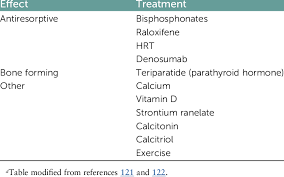
The anabolic drugs – these are bone builders
The anti-resorptive drugs – slow down bone loss.
Ideally both types are best paired with the recommended approach to exercise and nutrition.
The first line treatment is usually bisphosphonates. Bisphosphonates are used to treat and prevent bone loss and break down. They work by inhibiting the osteoclasts from breaking down bone tissue and slow down the rate at which bone is broken down. The are anti resorptive.
One of the most commonly prescribed is Alendronate (brand name Fosamax)
bisphosphonate
Alendronate is an oral bisphosphonate taken once a week with a full glass of water. You are advised to take this medication first thing in the morning on an empty stomach either standing or sitting tall for the first 1/2 hour prior to eating. It is usually prescribed for 5 years. As with all medications there are some common and rare side effects. Not everyone can tolerate Alendronate so there are options.
Risedronate (brand name Actonel)is taken in tablet form once a day (5mg) or once a week (3.5mg). It also works by slowing down the rate at which old bone is broken down allowing the body to increase bone density and reduce the risk of fracture. You may be offered this instead of alendronate as it is gentler on the stomach if you cannot tolerate the latter.
Ibandronate (brand name Bonviva ) This is a bisphosphonate available as an injection once every 3 months or in tablet form once a month. Intravenous bisphosphonates are administered through an IV infusion for those who cannot tolerate oral bisphosphonates or for those who require rapid treatment.
Zolendronate (brand name Reclast) is a bisphosphonate which is give intravenously once a year usually for 3 years. It is precribed by a specialist. This medication may be offered as a first line treatment after a hip fracture.
One advantage of bisphosphonates is that they keep working for a while after you stop taking them. So, if you have been taking them for 5 years and if your fracture risk is not high, you may be offered a 2-3 year pause (drug holiday) which may help to negate the risk of rare side effects.
Densosumab (brand name Prolia ) This is an injectable medication administered every 6 months by a health professional. This drug is likely to be prescribed if you are older and if you are likely to keep needing bone strengthening treatment. It is not considered the first treatment option for osteoporosis. It is indicated for those who have a high risk of fracture. If you come off this treatment it is vital you continue with a bisphosphonate as there is rapid bone loss and higher risk of fracture if you stop without a follow on bone medication.
Raloxifene (brand name Evista). This is a ‘selective oestrogen receptor modulator ‘ (SERM). It increases bone mineral density by decreasing bone resorption. It is usually given to younger post menopausal women as it slightly increases the risk of blood clots or strokes. Research done shows that it only reduces spinal fracture risks rather than hip fractures. Raloxifene may be associated with some protection against endometriosis and certain cancers eg breast cancer. It is known to be a non necrosis of the jaw medication (ONJ) which is a positive advantage. As with all medications you are advised to discuss potential side effects with your GP or health professional.
Teraparatide (brand name Forsteo) This is a synthetic form of the parathyroid hormone. It is not a bisphosphonate. Teraparatide is one of two treatments that stimulate the cells that build new bone. It is anabolic. You may be offered this if you have had several spinal fractures and are at high risk of breaking another bone. Teraparatide is a daily injection. The recommendation is that it is used as an offset treatment over 2 years. Patients who start on this will need to contine with further treatments like a bisphosphonate after the initial 2 years to off set loss of gains. This medication is unlikely to be prescribed if you have had bone cancer or radiotherapy for your bones.
Romosozumab (brand name Evenity) This is the newest drug treatment available in the UK. It is considered if the patient has had a fracture in the last couple of years and is at risk of having more. It’s given over the course of a year. Thereafter, it is likely the patient will be moved on to another type of osteoporosis treatment. It is an anabolic osteo medication and it is the only one of two treatments that helps to both promote bone formation and reduce bone loss. It works by blocking the action of a protein called sclerostin. It helps the osteoblasts to build bone and slows down the cells that break down bone. It involves having two injections once a month for 12 months. It comes in pre filled ready to use injection pens. After the course of treatment is completed it is important to start follow- on treatment straight away. Less is known about the benefits of Romosozumab for people with a lower risk of fracture. It is a very expensive drug.
Finally , as with all medications there are potential side effects which you are advised to discuss with your health professional /GP/dentist including rare cases of osteo necrosis of the jaw. This is a condition where the jaw does not heal properly particularly after an extraction.
It is therefore very important to maintain good oral hygiene and have regular check ups with your dentist.
There should be regular monitoring of your bone density and arranged medication reviews with discussion to ensure effectiveness and safety of treatment.
I have attempted to cover the majority of treatments prescribed today. Strontium ranelate is rarely prescribed now if at all and HRT is a topic for a dfferent discussion.
The Pilates Reformer
you can measure your grip strength
Is ‘Grip Strength’ an indicator of bone health and a predictor of longevity?
Grip strength might not be the first thing that comes to mind when thinking about overall health, but it plays a surprisingly big role. Whether you’re opening a stubborn jar, carrying groceries, or holding onto a pull-up bar at the gym, your grip strength is working behind the scenes. Beyond daily tasks, maintaining strong hands and forearms can help prevent injuries, improve overall muscle endurance, and even support better mobility as you age. Studies (referenced at the end of this article) suggest that grip strength is an essential biomarker for older adults, indicating overall muscle health and resilience.
Interestingly, research has linked grip strength to bone density and even longevity. A study found that lower grip strength was associated with increased risk of all-cause mortality, particularly cardiovascular-related deaths. Another study explored how grip strength correlates with bone mineral density, showing that weaker grip strength is often found in individuals with lower bone density. This suggests that improving grip strength might not just help with everyday tasks—it could also be a useful indicator of long-term health and ageing.
How does grip strength affect bone density?
Grip strength and bone density are closely linked, largely because both rely on muscle and skeletal health. When you engage in activities that require strong grip—like lifting weights, carrying bags of groceries, or even squeezing a stress ball—you activate muscles in your hands, wrists, and forearms. This muscle activation creates mechanical stress on the bones, which stimulates bone remodelling and helps maintain or even improve bone mineral density.
Studies have shown that lower grip strength is associated with reduced bone density, particularly in older adults. One study found a causal relationship between decreased grip strength and increased risk of osteoporosis, especially in individuals aged 45–60 years. Another study observed that women with lower grip strength had significantly lower bone mineral density at the spine and hip, as well as a higher risk of vertebral fractures. Additionally, research suggests that grip strength is positively correlated with lumbar spine bone density, indicating that stronger grip may contribute to better skeletal health.
So, if you’re looking for a simple way to support bone health, focusing on grip strength exercises might be a great strategy! Here are three exercises for you to try, to improve your grip strength :
The Rubber Band Stretch
Place a thick rubber band around your thumb and fingers near the middle of your fingers. Slowly stretch your fingers outwards and open your hand as wide as possible against the resistance of your band then release back to the starting position.
The Towel Twist
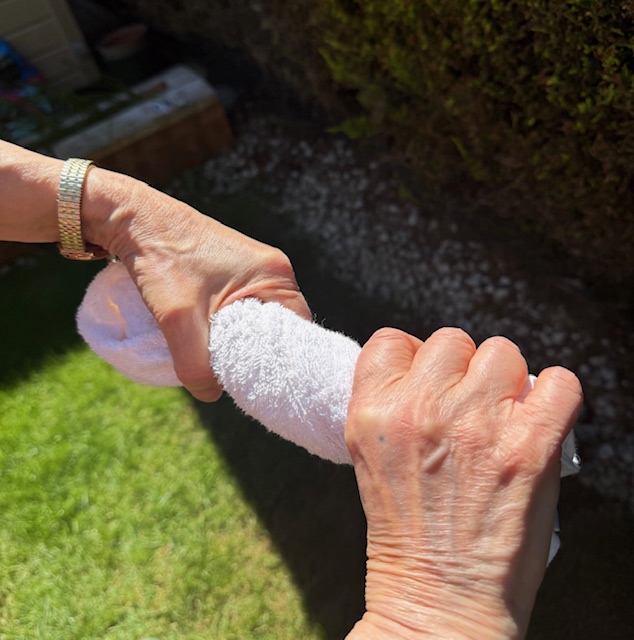
Twist a dry towel as hard and tight as you can and feel the muscles in your forearms work. It’s as if you are wringing out water. Hold for 5 seconds then reverse the direction. This helps to strengthen your hands, wrists and forearms.
wringing a towel in both directions
Wrist flexion and extension using a can or dumbbell
Hold a dumbbell or can of beans just over the edge of a table fist down. Keep your forearm stable and slowly lift and lower x 5-10 times. Repeat this , fist pointing up.
fist pointing up
Test your grip strength another way through a simple squeeze test:
Squeeze a stress ball with a maximum squeeze until your grip fatigues. Being able to maintain it for between 15 -20 seconds is good. Practice this several times to gradually improve your strength.
Stronger hands and wrists will make for greater independence in the years to come !
the stress ball
Grip Strength, Bone Health, and Frailty
A Study Published in The Journal of Gerontology (2020)
Findings: This study showed that grip strength was an important predictor of physical frailty, and frailty, in turn, was linked to lower bone mineral density. The authors suggested that frailty could lead to a decrease in bone density due to physical inactivity and muscle wasting, and that interventions that improve muscle strength (like resistance training) could also help maintain bone density.
Exercise and Bone Health
Findings: Studies show that weight-bearing and resistance exercises can improve both grip strength and bone density. A study in Osteoporosis International (2018) found that strength training not only increased grip strength but also helped prevent bone density loss in postmenopausal women.
Mechanism: These exercises help stimulate osteoblasts (cells responsible for bone formation) and promote bone remodeling. Stronger muscles also reduce the load on bones, enhancing their structural integrity over time.
Bone Density and Grip Strength as Health Markers in Older Adults
A Study in Bone Journal (2019)
Findings: This study confirmed that both grip strength and bone density are markers of aging and can predict long-term outcomes like fracture risk, quality of life, and mortality in older adults. Those with both lower grip strength and low bone density were at higher risk for poor health outcomes.
Mechanism: The study suggested that a combination of both muscle and bone health is essential for reducing the risk of falls, fractures, and disability in elderly populations.
SUMMARY
Bone Density & Grip Strength: Grip strength and bone density are strongly linked, as both reflect a person’s overall musculoskeletal health. Strong grip strength suggests healthy muscles and bones, which in turn support better overall health and longevity.
Longevity Implications: Poor grip strength and low bone density are often markers of frailty, increased risk of falls and fractures, and ultimately, a shortened lifespan. But maintaining grip strength and bone health through exercise can help combat these declines.
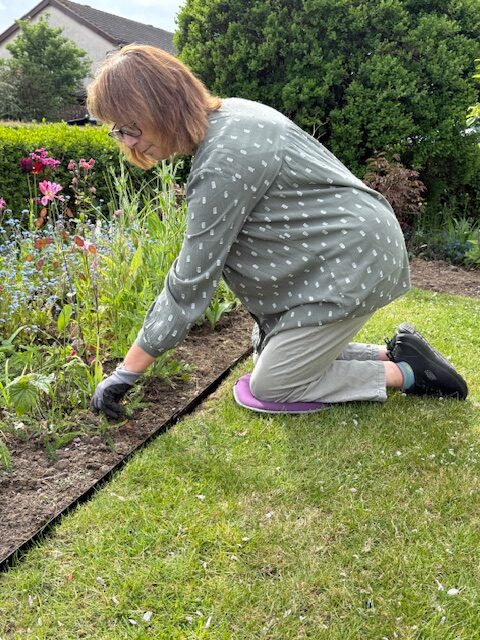
Using a garden kneeler
As Spring unfolds towards Summer and the days become longer and warmer it’s the perfect time to spend time outdoors tending and nourishing our garden and ourselves with sunshine (vitamin D!) movement and creativity as we plant and grow our favourite flowers, herbs, fruits and vegetables.
Gardening is a good way to keep fit through functional and mindful movement which enable us to take care of our muscles and bones. Many of the typical strength movements we do here include pulling, pushing, lifting, carrying, and bending which challenge our strength and flexibility.
So here are some tips for gardening safely:
Avoid bending from the waist, excessively rounding your upper back. Instead, hinge at your hip keeping your back straight, your spine in line and your knees soft or gently flexed.
Use a garden kneeler to protect your knees (if kneeling is an option). Alternatively, a gardening stool may help to maintain a more neutral back and reduce strain in the spine.
Another option might be to cultivate raised beds to bring the garden up to you. This will help to minimise bending.
Lift the right way. Bend your knees, keep items close to your body. Engage your core prior to lifting. Do avoid twisting when lifting and ensure you are NOT lifting an object beyond your physical capability. You might consider carrying smaller loads and filling smaller watering cans.
Take breaks, listen to your body. Stand, stretch, and walk around every 15-20 minutes to reduce stiffness and overuse.
Wear supportive shoes and avoid stepping on uneven surfaces where you could slip or trip – think rockeries!
Assuming your garden is suitable you may wish to plant some green leafy vegetables rich in calcium like kale and broccoli.
As you plant seeds and flowers, pull weeds and push lawnmowers and carry bags of compost, strong bones like healthy gardens thrive and grow stronger!
Growing vegetables in raised beds
Pilates Exercises for you to practice to protect your back and move with ease
Cat – Cow – to mobilise the spine and warm up the back body. On all 4’s, inhale to lift your chest and look up, then exhale as you round your body lowering crown of head, tucking tailbone and tummy in.
Pelvic curl into bridge – to activate your glutes and hamstrings to support lifting. Lying supine, exhale, tilt your pelvis and peel your spine off the mat. Inhale hold, then exhale to peel segmentally down.
Spine twist – to warm up the waist and improve rotation. Sit tall with arms wide level with your shoulders. Exhale to rotate gently and slowly to one side. Inhale and return to centre, ehale to twist to the other side.
Shoulder rolls and arm circles – to prepare your shoulders for digging, raking and lifting. Roll your shoulders back for 8 then forward for 8. Now evolve this into arm circles for 8 reps both ways.
Swimming – to strengthen your back muscles and glutes. Lie face down on your front. Extend your arms in front. Pull your naval in off the mat. Lengthen and lift opposite arm and leg on exhale, inhale lower. Repeat other side. Remember to keep your neck long, in line with your head as you lift.
Side leg lifts – to strengthen your hips and improve lumbar and pelvic stability. Lie on one side in a straight line, stacking your legs, hips and ribs and shoulders. Lengthen and lift your top leg in line with your top hip or a bit higher, then lower. Ensure your lower waist is not sinking down into the mat and make sure you are not rolling back with your hips. You can place your top hand down into the mat for support and stability.
Bird dog – to improve balance and core stability. Come on to all 4’s on hands and knees. Extend opposite arm and leg and hold for 3 full breaths. Now change to your opposing diagonal.
Squats – strengthens lega and hips for safe lifting . 10- 15 reps
Chest Expansion – to improve your posture after flexing or bending forward. Stand tall, pull arms down and behind you interlocking fingers, inhale and lift and open your chest. Exhale and release. x 5-6 times.
Important tips to take on board
Maintain a strong core – draw naval in towards your spine on your exhale when pulling weeds, lifting pots, digging, pushing a wheel barrow. A strong core reduces pressure on your lower back.
Hinge at the hip crease – not at the waist. Avoid rounding through your upper and lower back. Instead,soften knees, send hips back and keep your spine long from your head to midback to your base of spine.
Use your legs for lifting – squat with bent knees, engage glutes and thighs, exhale as you lift. Legs are stronger than your back and shoulders.
A few stretches afterwards would be good to aide recovery! Some examples could include :
standing sidebends with arm over head
figure 4 glute stretch (supine on a mat)
childs pose taking hips to heels and opeing knees apart – great for lower back stretch.
By applying these principles, we can protect our spine and posture, strengthen our core and move more efficiently!
Gardening is a workout and like any workout requires opreparation, proper form and technique and recovery.
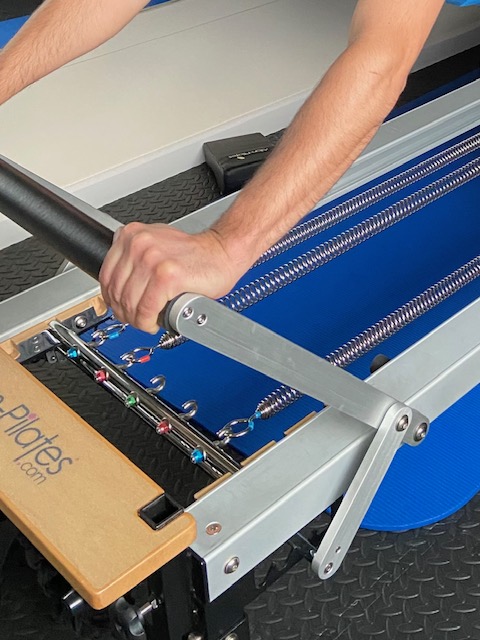
The Pilates Reformer offers numerous benefits for individuals with osteoporosis, focusing on improving bone density, posture, and overall strength. Its adjustable resistance allows for controlled, weight-bearing exercises, which are crucial for stimulating bone growth and maintaining bone health. The Reformer also enhances core stability, balance, and flexibility, reducing the risk of falls and fractures—a key concern for those with osteoporosis. Additionally, its low-impact nature makes it a safe option, minimising stress on fragile bones while promoting muscular endurance and proper alignment. This versatile equipment supports a comprehensive approach to managing osteoporosis, fostering both physical resilience and confidence.
Here is a short video clip demonstrating balance, control and weight bearing exercise using the Reformer.
Traditionally Joseph Pilates taught his system of what was known then as Contrology on large spring apparatus like the Reformer and Cadillac which has become widely popular today. We grow strong using the resistance of the springs which also stretches and lengthens us allowing for more fluid movements, weight bearing and core strengthening exercise. Stronger muscles – stronger bones!
Pilates Reformer
In my boutique studio I tailor the exercises we do specifically for your needs using some of this amazing equipment. The exercises we do are then adapted for your own home practice as described in your home exercise prescription.
Group mat classes
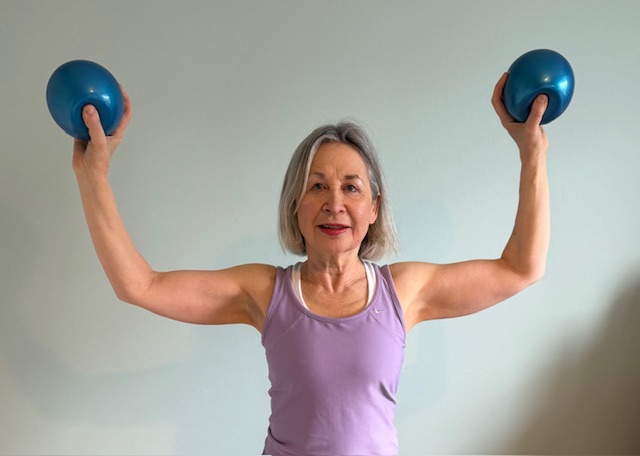
Many people who come express interest in coming along to my group mat classes and enjoy the social cameraderie in participating along with their fellow members. We do different exercises each week using a variety of different Pilates props eg toning rings, weights, resistance bands and ova balls. Classes are run at two different levels : beginners and bone safe; and mixed ability. I offer progressions and modifications in both classes.
For Further Information about my Edinburgh based classes please contact me on
Exercises involving loaded flexion like the Standing Roll Down, the seated Roll Back, Rolling like a Ball, The Teaser.
The flexion and rotation movement as in The Saw.
Abdominal curls and crunches which involve lifting your head into forward flexion.
End range movement as in the Spine Twist and Side Bend (Mermaid)
In my classes and 1:1 sessions, I modify many of the traditional Pilates exercises Joseph Pilates taught to make them safe for you to do. One very useful and beneficial functional standing movement for you to do is called The Hinge where you flex forward from your hip crease, but you keep your spine in one long diagonal line to avoid becoming top heavy in your mid to upper spine.
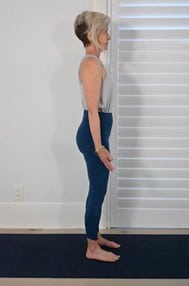
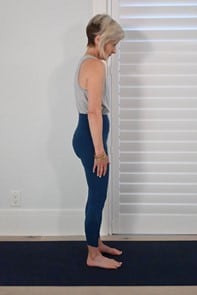
Good posture improves balance and decreases the potential for a fall.
It also helps you to avoid pain or discomfort in your back, neck and shoulders. By strengthening your upper body and your core muscles you can improve your posture. In Pilates we emphasise alignment because if your muscles and joints are all better aligned and supported, your body can move much more efficiently with less effort, less load and less risk of injury. Poor posture causes negative structural changes with an excessively rounded upper spine called a kyphosis. We can ‘stop the stoop’ and remember to sit, stand and walk tall! This also gives a well-deserved boost to our self-confidence and self-image. Good posture supported by strong muscles literally makes you appear taller, younger and more self assured.
I recommend you try to check your posture in daily life when sitting at a desk, driving, reading, walking along the pavement and even when standing talking to somebody.
A Stronger Core
This will help to support our posture, hold our head over our spine, tighten our abdominals and enable our upper and lower body to become integrated. Our inner core initiates with our breath and ends at our pelvic floor. It is essential for stabilising our spine. The fundamentals for creating a stronger core are taught in my classes and form the backbone to the exercises. Moving from a strong centre will help your balance and ability to control your movements.
Develop balance, strength and flexibility in correct alignment and posture.
Strength and resistance training using weights, bands, toning rings in addition to impact exercise is key for maintaining muscles mass and bone density. Bones respond to mechanical loading or stress place upon them.
The force generated by pulling on tendons attached to bones when you move, stresses the bone and this stimulates bone remodelling.
Stronger muscles! Stronger bones!
Resistance training means working your muscles against force to become stronger and this becomes very important as we get older as muscles decline in strength. Strength training exercises for improving bone are site specific which means you work particular muscles groups to strengthen specific bones in the body. If you want to build bones in your arms and shoulders, you need to stress the muscles in your arms, so the muscles are pulling on bones. Similarly, if you want to strengthen the bones and muscles in your hip you need to do exercises that specifically target your hips.
Progressively becoming stronger – Progressive Resistance Training
As we improve and become stronger, we need to gradually increase the intensities of the bands or weights we are using. The intensity must be challenging enough to make a positive difference but also must be progressed in a safe way with good technique.
Start with lighter bands and weights and gradually increase the intensity until you find you can only manage 8-10 reps consecutively with good technique. When you can do 15 -20 reps fairly easily I recommend you increase your weight by 1/2 kg. We also need to vary the exercises with changes of direction and moving patterns, so we continue to progressively challenge ourselves.
Specific exercises we can do to build and maintain strength in our legs and hips for preserving our independence include functional strength exercises like squats and lunges in various forms essential for walking, going up stairs, and for balance. The squat is one of the most important functional moves you can do for many of our essential activities in daily life e.g. getting up from a chair and sitting back down.
You can progress this by slowly sitting down for a count of 10 and rising for 5 counts.
For the upper body exercises such as bicep curls, standing rows, shoulder press using graded weight intensities will help keep our arms and shoulders strong for lifting, pushing and pulling.
When our foot strikes the ground forces as in walking, hopping and running forces are transferred up through the bones of our feet, legs and hips like a vibration and this may help to stimulate the remodelling of the bone to the lower parts of our body as our feet hit the ground with force.
Impact exercise can be graded as
low (as in walking) moderate (as in heel drops) high (as in jumping)
Evidence has shown that although walking and swimming has perhaps only a small impact on bone improvement any type of appropriate movement activity is important. A word of caution though, if you have had fragility fractures it is best to avoid medium to high impact exercise such as jumping, hopping and running and instead try heel drops, marching and step ups.
Here is a chart depicting ground reaction forces with graded movements and activities.
Ground Reaction Forces relative to body weight showing different moves and activities
Lunge
1.1 x
Walking
1.2 x
Marching
1.5 x
Jogging
2.6 x
Step up (12”)
2.7 x
Heel drops (pumps)
3.6 x
Jump Squat
3.8 x
Foot Stomp
4.6 x
Vertical jump
4.7 x
You can do 5 sets of 10 reps = 50 spread throughout your session
Aim to work between 2 and 4 of the above ground forces
We want to stimulate bone remodelling through impact exercise.
For those with spinal fractures, please confine to low impact exercise i.e. walking as medium to high impact is not recommended.
(I have extracted this information from an Australian Pilates training website Pilates HQ which is physio led).