Strength Training, Bone Health and the LIFTMOR Study
Strength training is one of the most effective ways to
Preserve and improve muscle mass
Improve bone density
Boost Metabolism
Protect and support joints
Enhance mental health
Improve posture, balance and mobility
The LIFTMOR study short for Lifting, Intervention for Training Muscle and Osteoporosis Rehabilitation is one of the most influential pieces of research carried out in the world of bone health. This randomised control trial in 2018, investigated the safety and efficacy of high intensity resistance and impact training in post menopausal women aged between 60-70 with low bone density. The study aimed to determine if high intensity resistance training could improve bone density and reduce fracture risk in this population.
The women were assigned to two groups – either the high intensity intervention group or the alternative group who were asked to perform home based exercises with emphasis on stretching and mobility. Both groups were subject to pre and post intervention BMD (bone mineral density) testing.
The Liftmor study group was carefully supervised by skilled exercise instructors and health professionals (physiotherapists) due to the intensity and potential risks involved, with emphasis on proper form and technique, prior to gradual weight progression.
Participants performed 5 key exercises lifting weights at a high intensity, typically 80-85% of 1 repetition max (1RM). 1RM is the maximum amount of weight you can lift at any 1 time.
The 4 Key Exercises using barbel weights
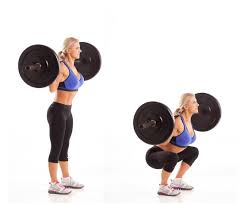
Back squats
dead lifts
shoulder presses
Lunges
jumping pull ups – using a pull up bar (involved impact to stimulate bone growth)
Participants were asked to to 5 sets of 5 repetitions for each exercise. They attended 2 x 30 minute sessions per week over a period of 8 months.
Key Findings
At the end of the trial the intervention group showed an overall significant increase in their BMD. Participants showed 3.2% increase in spinal bone density and a 2.2% increase in hip bone density which is comparable to effects from taking bone medications. The study therefore demonstrated improvements in lumbar spine and femoral neck BMD compared to the low intensity exercise programme in the second group.
Focus on Bone health
The Liftmor programme targets key areas like the femoral neck (connects the thighbone to the hip) and lumbar spine. However the Liftmor Programme is not suitable nor recommended for everyone due to risk of injury from using high intensity barbells (weights). Individuals with recent fractures, joint issues, or cardio vasular conditions would be excluded. The Onero Programme developed in Australia has evolved from the Liftmor study and is run strictly under professional guidance to ensure a safe and effective approach to maintaining bone health.
Implications
Although the Liftmor Study suggests that high intensity training can be a safe and effective strategy for improving bone health when carefully supervised and monitored by health professionals, the question remains : Do we need to lift heavy to strengthen and increase our bone density? Could lifting lighter weights working at 50 – 70% of our 1 rep max be beneficial and effective?
Modifications
As an experienced Pilates teacher running bone safe classes I modify the 5 key exercises as listed in the Liftmor programme to ensure safe and beneficial practice for my class members, making further adaptations if required.
Strength training Overall
Current research widely available in the media and literature suggests that strength training can help slow down muscle and bone loss and help build stronger bones. Regular exercise particularly weight bearing and resistance training is crucial for stimulating bone growth and slowing bone loss.
Reference : https://pubmed.ncbi.nlm.nih.gov/28975661/

Exercise modifications to the Liftmor training.
1.Squats (in the study you place the barbell across your back on to your shoulders, and squat as you bend your knees and drive your hips back) its like a ‘sit to stand’ move. Your feet are slightly wider than your hips.
Think of the following as a sit to stand keeping a straight angled back. You can load up in a number of ways :
a) Two dumbells down by your side
b) Hold a kettlebell on your chest , chest up!
c) Position the weights on your shoulders
2. The Dead Lift (in the study the barbel was picked up from the floor, hips go back (hinge), you broaden the chest then push the hips forward to stand tall)
Start with practising the hinge. Place the kettlebell or dumbbells on 2 blocks in front of your feet. Keep the knees above your ankles and keep the vertical shin ankle. Keep your chest broad and push the floor away through your feet as you straighten up to stand tall or alternatively stand with dumbbells in both hands by your sides and repeat the hinge movement. Alternatively you can stand on a flexi band holding both ends taut for resistance as you hinge sending your bottom up then push up through your heels to straighten.
3. The Shoulder Press (in the study you bring the barbell (bar) to your collar bones and keeping a tall posture, press the weight to avove the head and straight down to your chest.
Modify this by holding 2 weighted balls or dumbbells with arms in goal post (as in the photo) and press the weights to above your head and down to your starting position.
4.Lunges or split squats holding weights down by your side for example. https://www.youtube.com/shorts/7w6T1niQY8M?feature=share
5.The Jump Pull Up (This is an explosive move involving speed, power and impact. You ‘pull yourself up’ on to a raised and fixed higher pole and jump, landing on flat feet for ground force reaction (impact).
Modify this by placing a short flexi band around a hook higher up on a wall. Pull down on the band bending your knees and jump. Allow soft knees to begin with as it can be hard on your knees.
Or you can place your hands and push off from the back of a chair.
My preferred option however is to grip the pull up bar fixed to the top of my doorway, bend my knees up and jump down.

Remember to gradually increase the intensity of the weights you are using as in Wolffs law, the body adapts to the amount of load placed on it.
In my classes I have specially adapted my strength programme for building bone by initially doing 5 sets of the 5 exercises with 5 reps of each exercise.
The ONERO program pioneered in Brisbane, Australia was developed a few years following the successful outcome of the LIFTMOR Study and is now implemented in various clinics to provide targeted exercise for individuals with osteopenia and osteoporosis. The data indicates that ONERO increases bone mass , improves posture and reduces falls in patients. There is optimism and hope that many people will benefit from this latest intervention in boosting bone health.